November 2016. Team Theragyne — Jackie Tan Yen, Larry Loo, and Everett Koh — won first place at the QuintilesIMS & NTUitive Innovation Challenge, beating 29 other teams and walking away with the $5,000 prize.
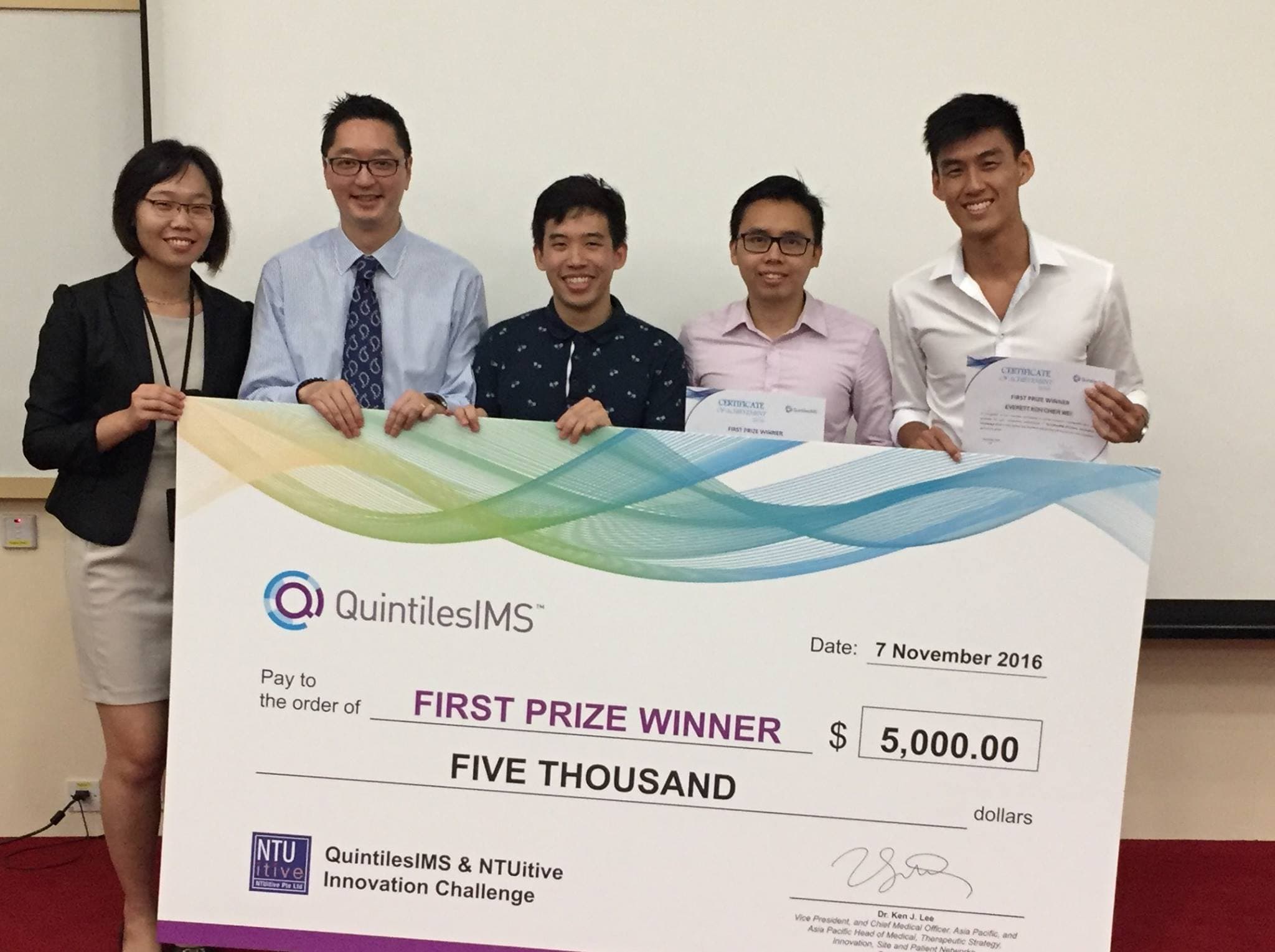
the challenge
QuintilesIMS (now IQVIA, the world's largest clinical research organisation) ran a hackathon with three problem tracks. We picked the hardest one: Inspection & Risk Prediction Data Analysis — predicting which clinical trial sites are at risk of an audit finding, using a real dataset from their operations.
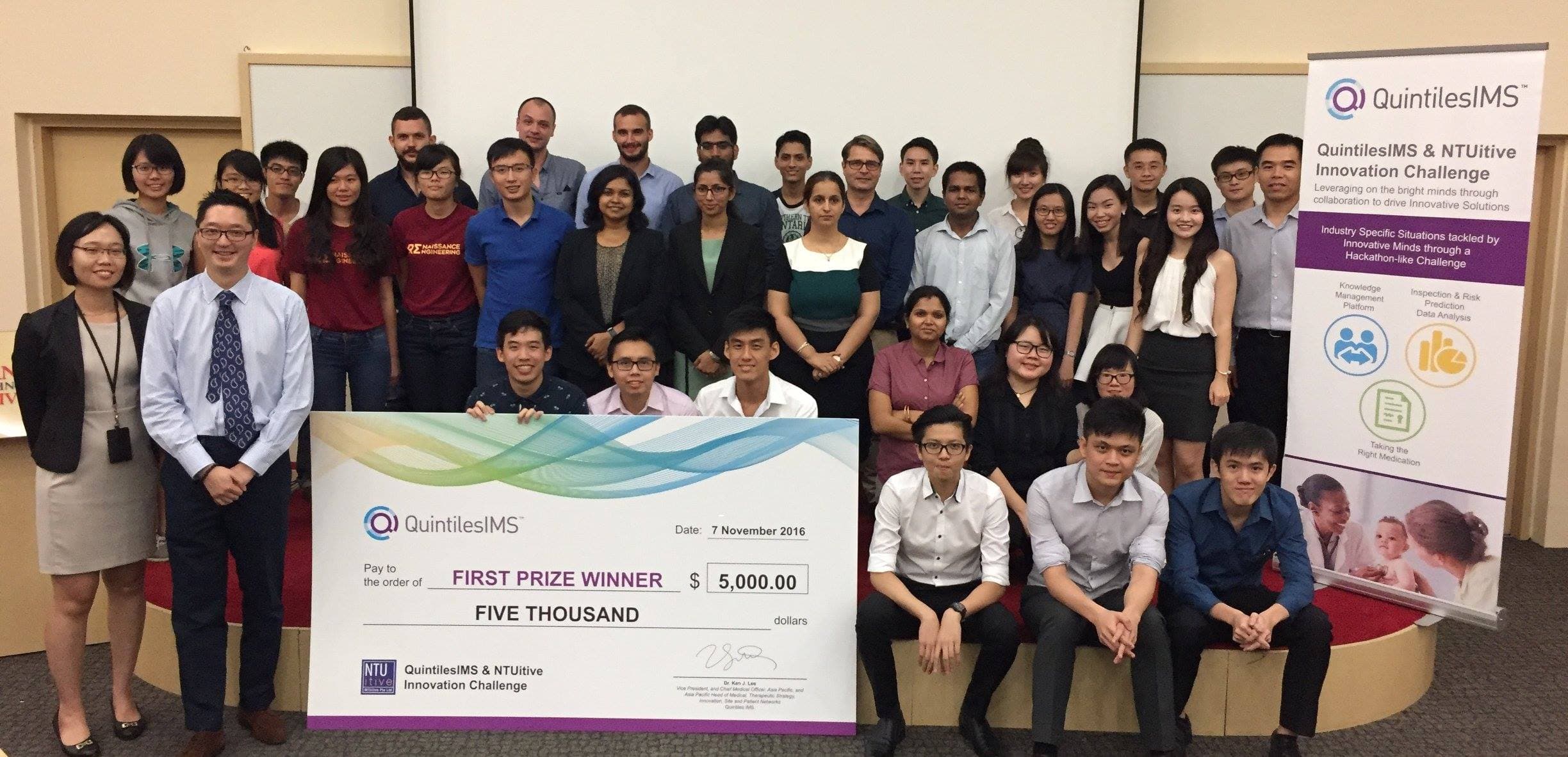
30 teams registered. 10 made it to Demo Day on 7 November 2016.
what we built
Two things:
A predictive model — trained on QuintilesIMS's actual clinical trial data to flag sites at elevated audit risk. We iterated on their existing baseline model and improved predictive accuracy by 20%. The competing teams were mostly master's students specialising in data science. We were biologists.
A monitoring dashboard — an end-user interface for clinical trial managers to track site risk scores, drill into individual trials, and get early warning signals before an audit finding materialised.
The combination of model performance and a usable product interface is what won it.
what i took away
Beating data science specialists as a biology PhD student was validating — but the more interesting lesson was about problem framing. The teams that lost were optimising their models. We spent the first few hours understanding what the end user actually needed, then built for that. The model was in service of the dashboard, not the other way around.